


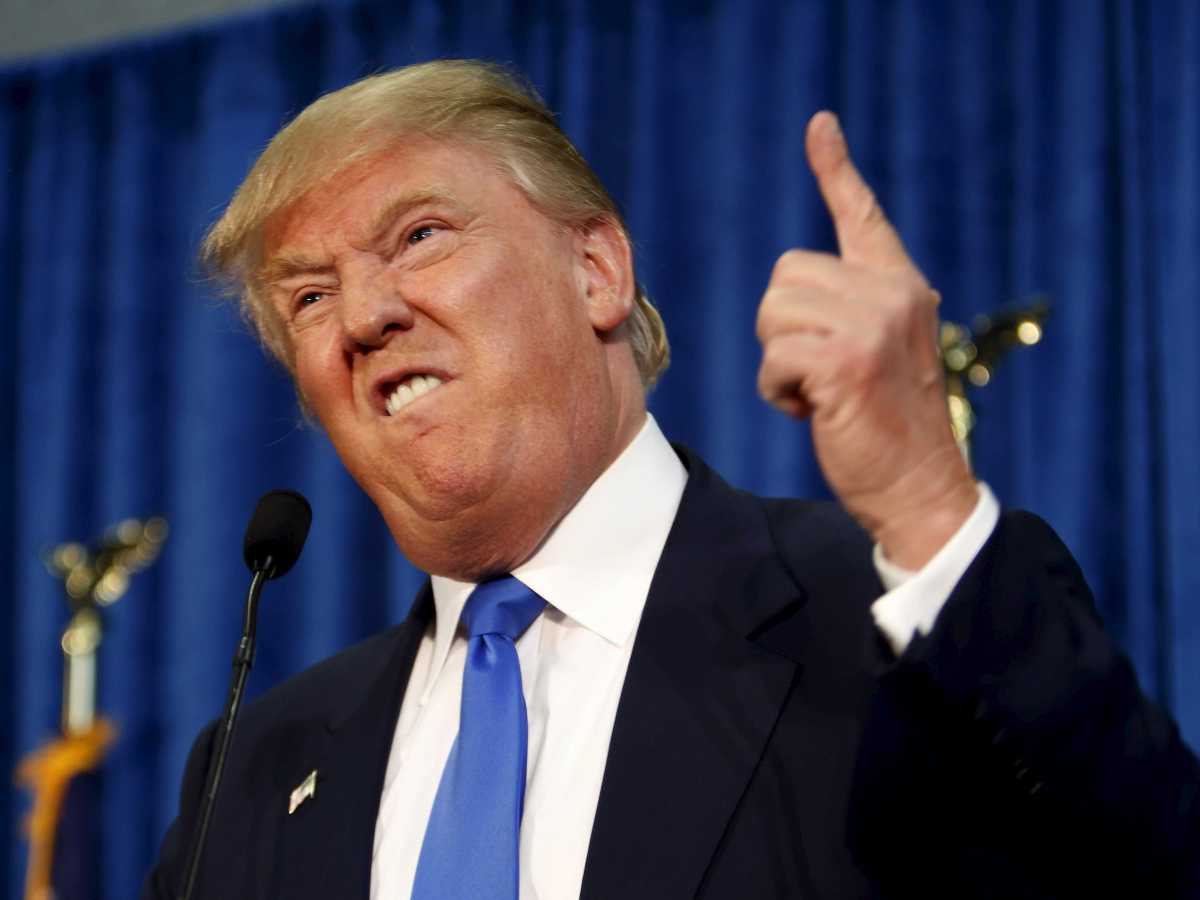
There’s a moment in the political life of a nation when the warning signs stop being abstract and start showing up on your receipt at the grocery store, in the fuel pump, or in the letter from the bank about your farm loan. We are past that moment. What we are living through is not a sudden catastrophe but a slow, grinding erosion—one that Republican leadership has watched unfold with a mix of silence, fear, and occasional timid objection.
By Kevin Seraaj, J.D., M.Div., and Tamara Drake, Orlando Advocate News
The premise is uncomfortable but difficult to ignore: we have a president in visible– again, visible– cognitive decline, surrounded by a party that has spent years protecting him from the consequences of his own impulses rather than protecting the country from those impulses. And the bill for that protection is coming due– in the form of lost markets, higher prices, and a government that runs on fealty rather than competence.
The Protection Racket
Let’s start with the simplest, most human part of this. Donald Trump is an old man. Pure and simple. That is not a diagnosis; it’s a fact. What is also a fact, documented by polling and increasingly voiced by people who once defended him, is that a majority of Americans see him as becoming more erratic with age. A Reuters/Ipsos poll from early 2026 found 61% of Americans—including 30% of Republicans—described him that way. Only 45% saw him as mentally sharp, down from 54% a couple of years earlier. Most of us, if he were living at home with us, would have put him a nursing home by now.
These aren’t partisan attacks from the usual suspects. Former MAGA allies like Marjorie Taylor Greene publicly questioned whether his “mental capacity needs to be examined”. Even Alex Jones said he “babbles” and sounded like “the brain’s not doing too hot”. When the people who built the MAGA movement start whispering about the 25th Amendment, you don’t need a medical degree to see the shape of the problem.
But here’s the thing: the problem isn’t just Trump. It’s the structure around him. Republican lawmakers didn’t just tolerate this; they built a system of protection around him. They blocked oversight, deflected questions, and made a conscious choice that loyalty to the man was worth more than the constitutional responsibilities of their offices. Good governance—the boring, essential work of checking power and making sure the machinery runs—was traded for sycophancy. And when you trade governance for fealty, you wake up one day and realize that the bill you ran up has to be paid.
The Trade War That Wasn’t Won
Well, that bill has arrived, and it’s itemized. The most visible line item is the trade war. Trump launched tariffs on the entire world with the promise of a manufacturing renaissance and checks in Americans’ pockets. Michigan Senate candidate Mike Rogers, who once cheered the tariffs as putting “the American people back in the driver’s seat,” now runs ads saying Canada is not our enemy and we need to end the tariff war. A year later, the promised benefits haven’t materialized. What has materialized is inflation. A New York Fed study estimated that about 26% of tariff increases get passed directly to consumers.
For farmers, the damage is deeper than inconvenience. American agriculture is in what leaders are calling a potential “widespread collapse.” Farm bankruptcies doubled. Only about half of farm borrowers were profitable in 2025, and projections for 2026 are worse. The U.S. share of the global soybean market has fallen from 47% to roughly 24%, with Brazil filling the void. China effectively boycotted American soybeans. All this while Republican lawmakers smiled and dismissed the harm being done and blamed Joe Biden for everything except Trump’s birth. They represented themselves instead of the people who elected them, even though they understood that these aren’t markets you lose for a season and then win back; they are relationships built over decades and severed in a tweet.
The administration’s response has been bailouts—$12 billion here, emergency payments there. But as one Illinois farmer put it, most farmers will use that money just to pay down debt. You cannot subsidy your way out of a self-inflicted wound.
The Trucks Don’t Lie
The trucking industry is the circulatory system of the American economy. When trucking struggles, everything struggles. And right now, trucking is caught in a vise. And unbelievably Team Trump keeps tightening that vise. Operating costs hit record highs. Diesel topped $6 a gallon nationally in September of this year. The average tariff rate on imported goods jumped from 1.5% to nearly 12%, and the policy has changed more than 50 times since Trump took office. Every business owner, every corporate executive, every 1st year business student knows you cannot plan a business— a farm, a factory, a trucking company— when the rules change fifty times.
Consequences ripple outward. In the world of procurement and contract administration, it is known as “the Ripple Effect.” Freight demand is soft. Manufacturing production tied to freight is down nearly 10% since 2017. Housing starts are down over 13%. The one potentially bright spot is data centers—a boom driven by AI and cloud infrastructure that has little to do with the kind of broad-based prosperity that sustains a middle class. Data centers bring with them their own source of concerns, however, which we talk about elsewhere, but a trucking company can’t simply turn to hauling computer server racks if the rest of the economy is contracting. That’s not how things work.
The Concrete and Steel Reality
Infrastructure was supposed to be the one thing everyone agreed on. But tariffs have made the basic materials of building expensive in ways that are hard to overstate. Construction input costs rose 7.1% year over year through mid-2026. Diesel was up 44%. Liquid asphalt up 45%. Aluminum mill shapes up 40%. Steel mill products up 22%. The Associated General Contractors has pleaded for tariff relief and a long-term transportation funding bill, warning that without it, both private and public construction face cutbacks.
When you make it more expensive to build and repair things, you get fewer things built and repaired. That’s not a political opinion; it’s arithmetic. And it happens precisely when the country needs to be investing in its crumbling physical foundation.
How We Got Here
The road to this point wasn’t built in a day, and it wasn’t built by Trump alone. It was built by a Republican Party that decided, at some point over the past decade, that the cost of crossing Trump was higher than the cost of enabling him. They watched him push boundaries, and they shrugged. They watched him make policy by impulse, and they defended him. They called his strategies brilliant. They lip-synched the phrase “art of the deal,” when explaining his erratic business decisions. As one Trump supporter at a rally explained: “there’s God, and then there’s Trump.”
The midterm results in 2026 suggested voters were paying attention even when lawmakers weren’t. Democrats flipped seats in agriculture-heavy states and northern border states where tariffs hit hardest. Two-thirds of voters said the tariffs hurt the national economy. But even then, the structural problem remains: Congress could theoretically reclaim its tariff authority, but overriding a presidential veto requires two-thirds majorities—and Trump has made clear he’ll be “Mr. Veto”.
So here we are. A president in decline, a party that protected him rather than the country, and an economy that is showing the scars of decisions made by impulse and defended by silence. The American Empire isn’t falling because of one man. It’s eroding because too many people in positions of power decided that their own political survival mattered more than the survival of the institutions they swore to protect. That’s not a partisan statement. It’s just the thing that is plainly seen when we look at the receipts.

