

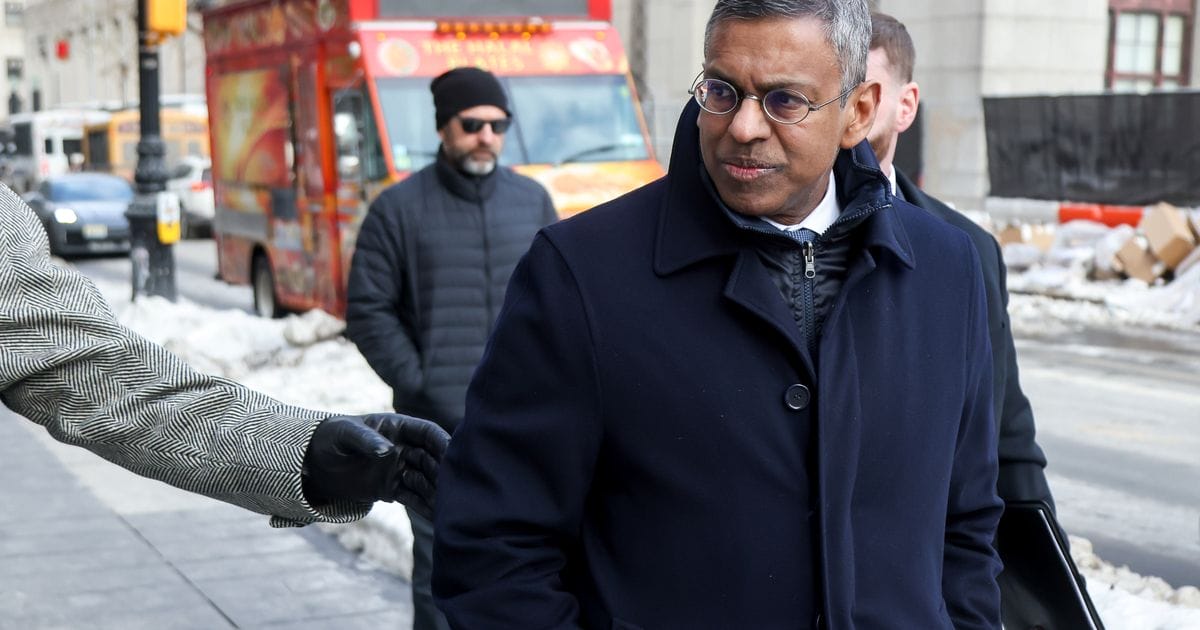
In a statement released today, federal prosecutors unveiled sweeping charges against Patrick James, founder and former CEO of First Brands Group, LLC, and his brother Edward James, a former senior executive at the company, alleging they orchestrated a years‑long financial fraud that ultimately collapsed the global automotive supplier and left lenders facing billions in losses.
by Frank Butler, Managing Editor, Orlando Advocate News
The indictment, announced by the U.S. Attorney’s Office for the Southern District of New York, accuses the brothers of running an elaborate network of schemes involving fake invoices, double‑ and triple‑pledged collateral, manipulated financial statements, and concealed debt, all designed to deceive banks, factors, and direct lenders about First Brands’ true financial condition.
Federal agents arrested both men in Ohio and they are expected to appear in court later today. A third participant, Peter Andrew Brumbergs, has already pleaded guilty and is cooperating with authorities.
A Global Company Built on Fraud
According to prosecutors, from 2018 through 2025, Patrick and Edward James transformed First Brands into a sprawling automotive aftermarket supplier through aggressive acquisitions — financed not by legitimate growth, but by fraudulently obtained cash.
At its peak, First Brands claimed $5 billion in annual sales. But when the company filed for bankruptcy in September 2025, it reported only $12 million in cash and more than $9 billion in liabilities, revealing, as prosecutors emphasized, the scale of the alleged deception.
Federal investigators say the brothers used multiple tactics to keep money flowing:
1. Fake and Inflated Invoices
Employees, acting under the brothers’ direction, allegedly created:
- invoices for transactions that never occurred
- inflated invoice amounts
- duplicate invoices pledged to multiple lenders
These falsified receivables were sold to factoring partners as legitimate customer debts, generating billions in financing.
2. Misleading Accounts Payable Schemes
Prosecutors say First Brands also deceived partners who purchased the company’s accounts payable. The company allegedly submitted false invoice data and misleading financial information to secure additional advances — money that was then diverted internally through transactions employees referred to as “round trips” or “corporate initiatives.”
3. Manipulated Financial Statements
Under Patrick James’s direction, employees allegedly altered internal financials to meet lender benchmarks. Investigators found “bridge” files comparing real numbers to the manipulated versions sent to lenders.
4. Hidden Off‑Balance‑Sheet Debt
The indictment describes a network of shell companies — the James Entities — used to secretly obtain inventory financing. These entities had no real operations. They borrowed money to “purchase” First Brands inventory, then pledged that same inventory as collateral. The resulting debt was kept off First Brands’ balance sheet and disguised as ordinary customer receipts.
5. Collateral Pledged Multiple Times
The James brothers allegedly pledged inventory to off‑sheet lenders that was already being carried by senior lenders, further deepening the deception. (An off-sheet lender is a company that funds or supports a loan without recording it directly on its balance sheet. The company that borrows the money doesn’t have to show it, and institutions continuing to do business with it– or lend to it– have no idea that it may be in over its head in debt. Is it legal? Yes, off-sheet lenders often share risk with other lenders while managing capital and compliance more efficiently.)
Collapse and Aftermath
By 2025, the fraudulent financing structure could no longer sustain First Brands’ rapid expansion. The company attempted to refinance or sell itself, but potential buyers demanded financial diligence the company could not provide. The collapse followed soon after.
Even as the company unraveled, prosecutors say Patrick James continued to enrich himself, directing flows of fraud proceeds into his personal accounts — allegedly totaling hundreds of millions of dollars.
Federal Response
Law enforcement leaders from the FBI, IRS‑CI, and Homeland Security Investigations condemned the alleged scheme, describing it as a massive fraud that:
- destabilized lenders
- endangered employees’ livelihoods
- corrupted financial markets
- operated like a Ponzi scheme, using new loans to pay old ones
The case is being prosecuted by the Securities and Commodities Fraud Task Force in the Southern District of New York.
The charges remain allegations, and the defendants are presumed innocent unless proven guilty.

- Frank Butler

- Frank Butler

- Frank Butler

- Frank Butler


